
By Dr. Bill Seiler, ShoreUp Physical Therapy
I work with a client who is obsessed with his VO2 max, blood work, and strength measures. Measures like VO2 max, a measure of aerobic capacity, are strongly correlated with long term health, hence my client’s obsession with the data.
The result is that he is incredibly fit. He optimizes his workouts around the outcomes and believes maximizing his metrics will lead to a longer and healthier life. He isn’t wrong. VO2 max, for example, is indeed one of the strongest physiological predictors we have for long term health.
However, as valuable as metrics like VO2 max are for data points, focusing on outcomes exclusively fails to capture the full complexity of human health.
On the other hand, I have a client who is an avid exerciser. He also skis, plays tennis, works, enjoys life with his grandkids, and frequently camps with his wife and friends. He appears 20 years younger than he actually is, living a simple, active, and joy-filled life. While I have no doubt he would score relatively well on a VO2 max or grip strength test, that is not his obsession. He exudes a level of vibrant health that is worth emulating.
This trend has become increasingly apparent to me over the years. The healthy “outliers” aren’t necessarily the ones obsessing over biomarkers; they are the ones who are joyful, health intentional, connected, active, and dynamic.
A Warning About Data
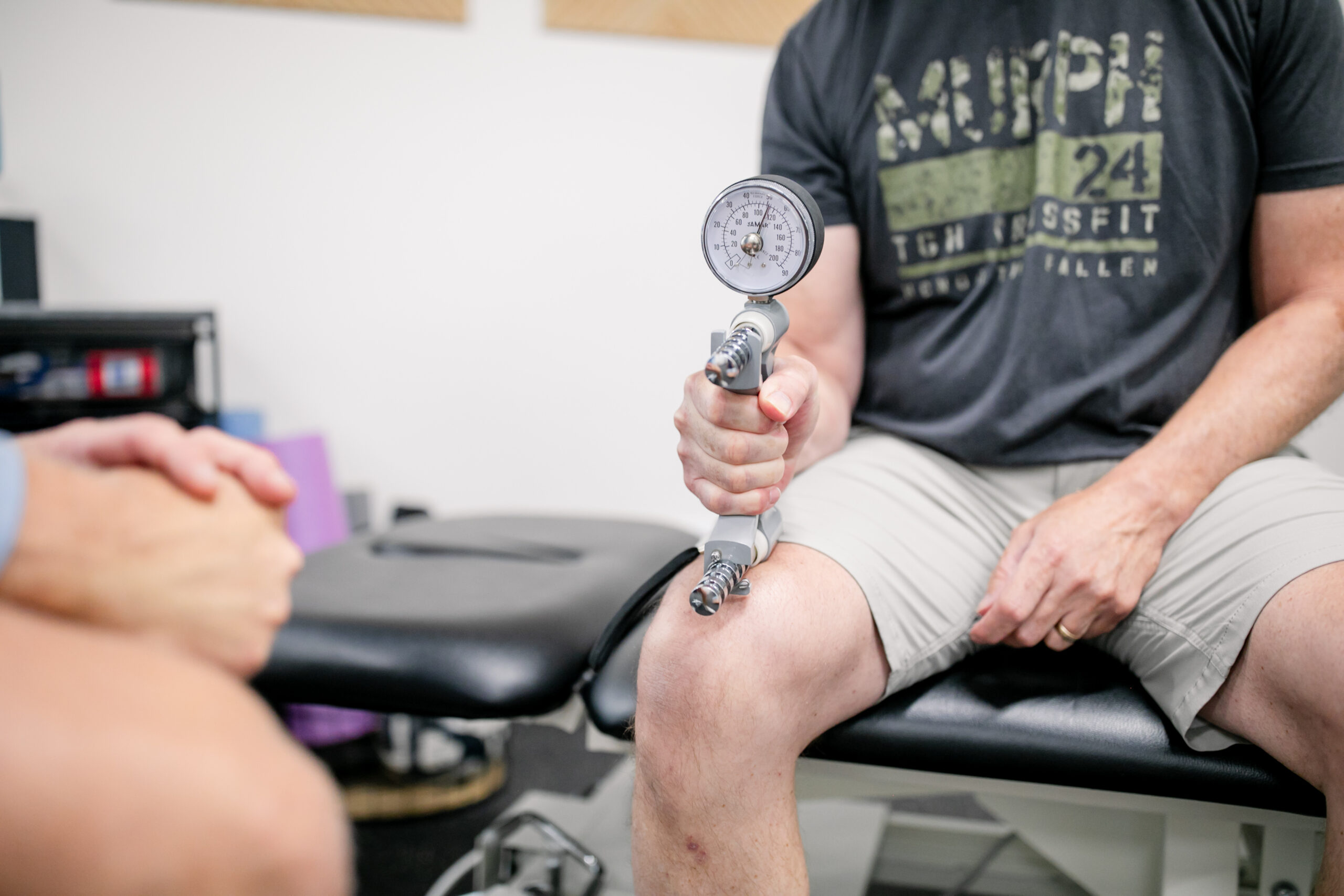
The recent “longevity boom” in popular media has driven many people to miss the forest for the trees. I am guilty of it myself at times. I frequently see clients doing dead hangs solely for grip strength metrics, grinding through brutal Norwegian 4×4 intervals strictly for VO2 max scores, and performing an assortment of isolated “hacks” just to score well on measurable benchmarks.
It is the exercise equivalent of studying only specific questions for an exam rather than actually mastering the subject matter.
It’s important to remember why measures like VO2 max or grip strength are heavily cited in research: because they are easy to quantify. Looking beyond pure numbers reveals fascinating data about who thrives as we age.
An Insight from Observation
Several years ago, headline grabbing data from the Copenhagen City Heart Study observed that individuals who played tennis lived an average of 9.7 years longer than sedentary individuals. Furthermore, the researchers observed that those who engaged in solo gym workouts or jogging were associated with less gains in life expectancy (+1.5 to +3.2 years).
Why? Because tennis isn’t just cardio. It’s a complex, dynamic sport that demands speed, power, stability, adaptability, and, importantly, social connection.
Building on this, a landmark study published in BMJ Medicine analyzed over 111,000 adults and discovered that exercise and sport variety provided a distinct, additional longevity bonus. After accounting for total physical activity, a summary by Harvard Health observed that participants who engaged in the highest variety of activities had a 19% lower risk of premature death compared to those who engaged in the lowest variety.
I believe that people engaging in a greater variety of activities have a reason to do so, whether driven by friends, family, or shared social experiences.
What Does This Mean for You?
If we step back from the testing metrics and look at the big picture, key clinical takeaways emerge for long-term health:
- Life is more than numbers: Well-being is dynamic. A holistic approach incorporating physical, emotional, social, spiritual, financial, occupational, and intellectual health is vital for our long-term flourishing.
- Movement is a win: Research supports that pretty much any exercise leads to measurable improvements in health span. Physical well-being is and always will be an essential part of long-term health.
- Fun, connection, and variety appear to be a benefit: Getting caught up in isolated “longevity hacks” can limit our long term benefits. Engaging, dynamic, and social movement, like racket sports or similar group activities, deliver holistic benefits that an isolated bike session cannot replicate.
- Data points are check points, not the destination: Trackable metrics like VO2 max and grip strength are useful tools to ensure you don’t have major physical blind spots or deficits. However, they are simply a reflection of one’s overall health.
The Takeaway
Don’t spend your life training just to pass a fitness test. Build a lifestyle that allows you to play, adapt, connect, and enjoy the years you are adding to your life.
If you want to build a balanced, resilient movement routine that keeps you playing for decades reach out to me directly at bill@shoreuppt.com!
References:
- Schnohr P, O’Keefe JH, Marott JL, Lange P, Jensen GB. Various Leisure-Time Physical Activities Associated With Widely Divergent Life Expectancies: The Copenhagen City Heart Study. Mayo Clin Proc. 2018;93(12):1775-1785.
- Harvard T.H. Chan School of Public Health. Which sports offer the biggest longevity boost? Harvard Health News.
- Zhang Y, et al. Physical activity types, variety, and mortality: results from two prospective cohort studies. BMJ Med. 2026;5(1):e001513.
- Harvard T.H. Chan School of Public Health. Exercise variety, not just amount, linked to lower risk of premature mortality. Harvard Health News.


