
By Dr. Bill Seiler, ShoreUp Physical Therapy
I am frequently asked which strength exercises I would recommend everyone be able to do. Honestly? Narrowing it down was a harder than I expected.
In fact, the original prompt for this article was to pick just five. But narrowing it down to five felt like a fitness sin, so I’m breaking the rules and giving you six. When making my selections, I weighed functionality, which exercises give you the biggest “bang for your buck,” injury risk, accessibility, and total muscle groups recruited.
Note: We are strictly talking about strength training here—excluding other forms of training like cardio and plyometrics. That being said, here are my top six exercises and exactly why they made the cut.
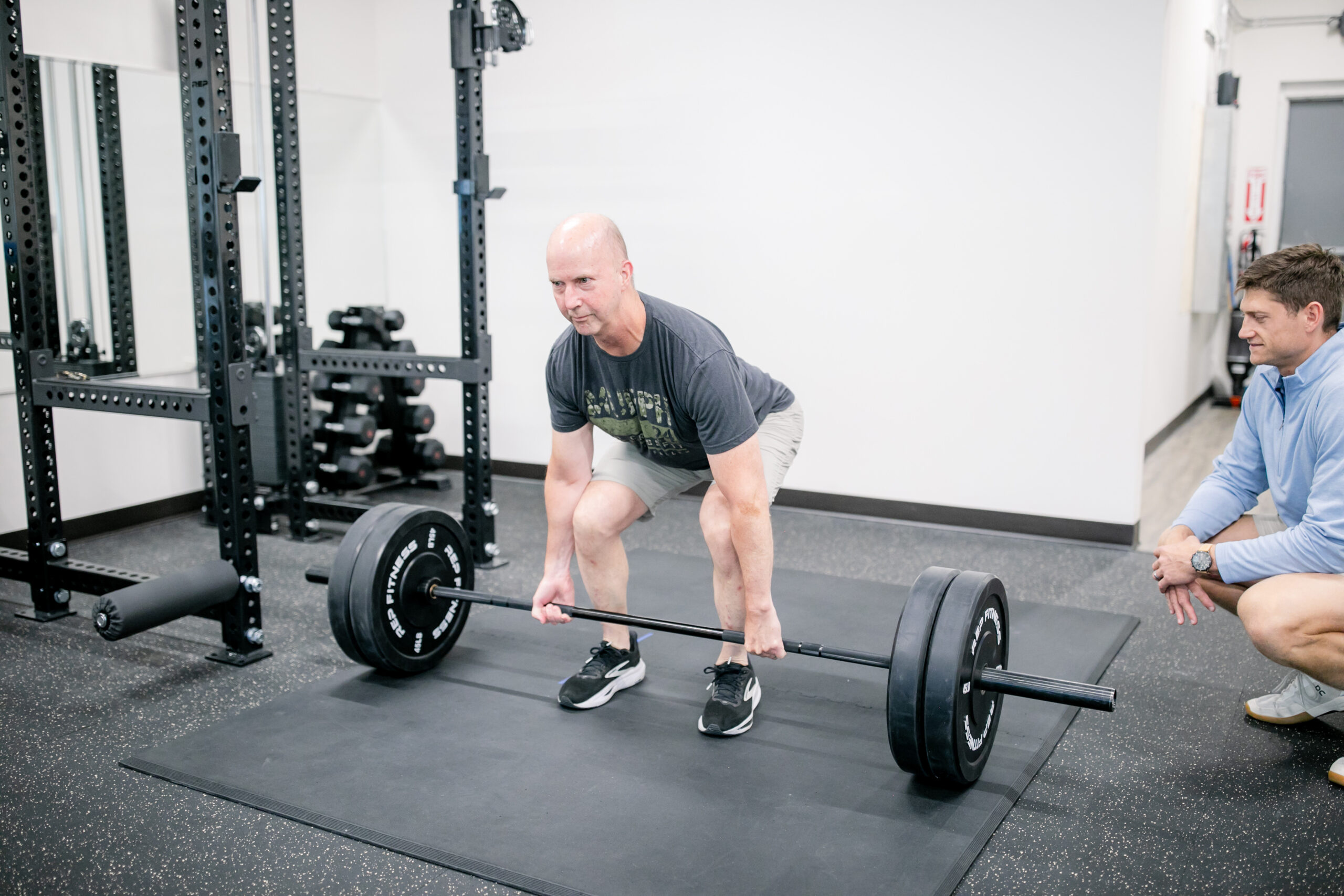
1. The Deadlift
Why it made the cut: Grip strength, spine health, and real world functional application.
In my opinion, the deadlift is a staple of functional movements. It teaches you how to pick up heavy things, builds grip strength, and promotes spinal stability. To put it simply: if you know how (and are physically able) to lift heavy things safely, your overall risk of injury decreases.
However, its benefits go even further than that. Notably, heavy deadlifts were a cornerstone of the groundbreaking LIFTMOR study, which proved that targeted resistance training can safely improve bone mineral density in older adults. If you want a resilient spine and a powerful grip, you need to deadlift.
2. The Lunge
Why it made the cut: Unilateral strength, balance, and hip stability.
While bilateral (two legged) exercises are great for heavy loading, the lunge forces each leg to work independently. This challenges your strength, stability, mobility, and coordination all at once. Because it isolates one side, the lunge promotes deep muscle activation of stabilizers that are often left behind in our two-legged lifts.. Also, the ability to lunge on and off the ground is an important skill for long term independence.
3. The Push-Up
Why it made the cut: Functional mobility, strength, and core activation.
Don’t underestimate this classic. The push-up is a time tested functional movement that correlates directly with your ability to get up off the ground as you age. Interestingly, research has even associated a higher push-up capacity with a reduced risk of cardiovascular disease. When done with proper form, it hits the core and can stimulate upper body muscle gains similar to the bench press with absolutely no equipment required.
4. The Overhead Press
Why it made the cut: Shoulder mobility, overhead strength, and functional independence.
As we age, one of the movements we tend to lose is the ability to comfortably reach and lift items overhead. The overhead press combats this by training overhead shoulder mobility and strength. We all want to be able to lift luggage into overhead compartments for travel, put items on high shelves, and lift up our grandkids without pain. Maintaining this overhead capacity is a massive win for lifelong physical autonomy
5. Row
Why it made the cut: Posture, spinal stability, grip strength, low risk high reward, and scapular stability
Choosing a “superior” upper-body pulling motion caused me some serious internal turmoil. I love the pull-up for its grip strength and raw functional benefits, but it places a high amount of stress on the rotator cuff, meaning I have to be selective about who I coach to do them. Pull-ups are also very challenging for a large portion of the population.
The row is the perfect compromise. The rowing motion effectively promotes both back and grip strength, but when compared to a pull-up, it significantly reduces stress on the rotator cuff while drastically increasing the demand on your spinal and scapular stabilizers. For overall applicability, benefit, and safety, the row takes the crown.
6. The Squat
Why it made the cut: Heavy loading capacity, mobility, and core activation.
You simply can’t have a definitive list without the squat. Squatting allows for substantially heavier loading through the legs and spine than single-leg lifts. It actively promotes ankle, knee, and hip mobility, translates directly to daily life, and forces incredible core activation (especially if you opt for a front squat variation).
Let’s Connect!
Well, there you have it, my top six.
Building a resilient body is one of the best investments you can make for your future. As Benjamin Franklin famously said, “An ounce of prevention is worth a pound of cure!” If you have any questions about how to safely perform these movements, how to dose them into your current routine, or how to level up your training in general, please reach out to me at bill@shoreuppt.com.


